As I sit here writing, Owen is exactly 1.5 months old, which means that I am exactly half way through my maternity leave. At some points it seems like it will never end - like when I'm home alone with him and he won't stop screaming and it will be hours before I get any relief, while at other points it not surprisingly feels like it has flown by. I've definitely lost my mental acuity for things like what day it is, when I last fed or changed the baby, when I last took a shower, etc, and getting back to a more normal routine will be a welcome change if for no other reason than to have some more variety in my daily life. On the other hand, no parent worth their salt really enjoys being away from their child when they are growing and developing so rapidly. I'll be going back to work just as all the exciting firsts are about to happen - crawling, talking, eating solid foods. Owen has always been a very strong little boy, moving his head on his own since day 1, but head control (while an important building block to greater movements) is not the wow factor milestone. I have been here for his first non-bowel related smile and some of the first giggles, but I can't help but feel I'll be missing out.
For a country that likes to proclaim how pro-family our values are, as a society we do very little to support new families. Paid maternity leave is a rarity and paternity leave is even rarer. While well-child preventative care visits are generally paid for by insurance, the cost of that insurance is often overwhelming for young families. No shock that the majority of people on state assistance medical insurance are children as the young parents are not financially stable enough to self insure. Upon reflection of the costs of having a child, it seems as if we have decided to put as many economic pressures as possible on young people to dissuade them from reproducing. This tactic fails of course, but it does set up children for failure unless they come from well-to-do families, which in turn allows us to further denigrate the poor for making poor choices and furthering the poverty cycle.
As is the case in so many areas of societal life, we make rules and institutions that support our ideal circumstances at the expense of the reality. Take funding for the ever controversial Planned Parenthood. Many conservatives don't want it to receive any federal funding because they offer abortion services under the belief that funding it encourages it. I can understand that sentiment, but then you need to direct those funds to social services to 1) provide care to those women who are being denied safe abortions, 2) provide care for those children that are either abandoned into the system or taken away from unfit mothers, and 3) educated on pregnancy prevention in more ways than just abstinence. Sadly, none of these things happen because the argument is made that funding for women's health care in general will ultimately allow private funds to be diverted to cover the abortions. This only results in worse health care for women out of a fear that a perfectly legal procedure may be done. The same thing goes for mental health - it is as if funding it encourages instead of prevents. How does all of this relate back to paid maternity/paternity leave? Well, if we were to have federally mandated leave to allow bonding as a family, that would mean that all families are of equal value to society, instead of just those families with wealth and power. It is too egalitarian to treat each family unit as an asset; we instead see them as economic drains on society unless they are corporate elites.
Showing posts with label culture. Show all posts
Showing posts with label culture. Show all posts
Saturday, June 15, 2013

Sunday, September 9, 2012
Cold War
It's election season and I can't stand it. It is if the country plunges into a political cold war between two disparate ideologies. There are so many things wrong with the way politics are carried out in this country, despite our lauding of the system and exportation of it to other countries. It helps to purpetuate some of the great lies in American culture (of which all cultures have, just to be clear).
What lies might those be? There is the great white washing of history, where we are told everyone came here of their own free will in pursuit of freedom and success. Well, sort of, except for all of those slaves that were imported, and all of the political exiles over the years, and what about the native populations that were already here... We are told that the country was found for religious freedoms, when in reality that was only a small segment of the early settlers, the rest were looking for economic gain both for themselves and their crown. We are told that the US has never lost a war, but what about the war of 1812, where we invaded Canada for not real reason other than our own expansionist ideals and were beaten back by the Canadians and the local Amerindians. That one has been expunged from our memory so much that even if you read the Wikipedia entry about the war it tells of US victory, although not as triumphantly as other wars, when the reality is more complicated. If Jefferson hadn't stated that the conquest of Canada would be a mere matter of marching, do we really think that just 40 years after our own independence we would feel competent enough to invade someone else? And these are just the historical fallicies that we pass down generation to generation as a matter of building patriotism. I find it sickening.
The worst of all the American cultural lies is the idea of supremecy over every other people on the planet. "We're #1" is the rallying cry of the brainwashed in this society, and it only gets worse during election season. How do the political parties try to make the opposition loose favor with the general populace? By showing them as making us less than the greatest by their standards of course. This politician is making us too european, and you don't want that because who would want to be like them? That politician will let all of the untrained, hapless rubbish from other countries that somehow managed to make it here citizens, which will dilute our greatness. The scapegoating of minorities gets to an all time high, whether it be ethnic or social minority makes no difference - if you are not part of mainstream consumerist USA you had better watch out or during election season the problems of the country will be placed squarely on your shoulders; by the way which is why we should limit your freedoms to preserve those of the mainstream. Or at least that is what the attack adds would have you believe.
This is the time of year that I avoid watching television because all you see during every commercial break is hatred and fearmongering. You rarely, if ever, see a positive add for a candidate that does not denegrate the opposition. It speaks a lot to the depravity of the political parties that they refuse to admit that there are multiple good people for the job, or even multiple viable solutions to our problems. No one person and no one ideology will save us from self destructions, which is essentially the problem we are having right now. The economy is sluggish right now because we believe in the power of capitalism, but if the masses don't have the resources to buy things, capitalism can't keep surging our GDP upwards. The solution? Give people more money to buy things, either through tax cuts (which just makes our federal cash flow problem worse) or by raising minimum wages (which makes those with the money mad because they feel like they earned their millions and don't need to share it with the workers who helped them make their millions) or through incentives (buy this new car and receive tax credits for the purchase).
All this reminds me of my favorite Sting song, "Russians", and in particular, a certain line that floats about my head each time I hear political banter: "There is no monopoly of common sense on either side of the political fence." While written about the historical Cold War between Russia and the West, particularly the US, I find the sentiment applies to any political stalemate. If only the mass populace would see it, or be allowed to even broach the idea, it could have a lot of good. At the very least we may be able to have a rational, educated debate about our problems instead of resorting to hysteria and gut reactions. The rash of gun violence in this country? Maybe that means we need to reexamine our gun laws to see if there is something we are actively doing that is making the situation worse. The unemployment rates? Maybe cutting all of the education funding wasn't such a good idea as we now don't have enough training centers to get people retooled for the jobs available, and the ones we do have are overbooked and overpriced to the point that the unemployed can't afford to retrain. Immigration? Maybe if we started seeing those coming here as human beings instead of "illegals" we might take a different approach. That doesn't mean no punishment for breaking the law, but it also doesn't mean treating them less than human which is part of our current practice along the desert borders. Social security nets, such as medicaid and welfare? If would be nice if both sides would agree that being poor is not a crime - they are not leeches on society that need to be treated with the same reproach as parolees from prison with constant drug testing and supervision. They are people that have not being able to acheive the American ideal due to a variety of factors, including being born into poverty with no social ladders to get out of it.
As a nation and as a culture, we have real problems that need attention. It would be nice if we could stop infighting and admit that our diversity makes us stronger instead of being a liability. The more entrenched we become, the more rigid the battle lines, the more we will be torn apart. That is how nations fall - they get stuck in rigid programs with rigid decision making models that do not allow for change and adaptation. You fail to adapt you fail to survive. Simple evolution.
 |
| Cannon left over from the US Civil War |
What lies might those be? There is the great white washing of history, where we are told everyone came here of their own free will in pursuit of freedom and success. Well, sort of, except for all of those slaves that were imported, and all of the political exiles over the years, and what about the native populations that were already here... We are told that the country was found for religious freedoms, when in reality that was only a small segment of the early settlers, the rest were looking for economic gain both for themselves and their crown. We are told that the US has never lost a war, but what about the war of 1812, where we invaded Canada for not real reason other than our own expansionist ideals and were beaten back by the Canadians and the local Amerindians. That one has been expunged from our memory so much that even if you read the Wikipedia entry about the war it tells of US victory, although not as triumphantly as other wars, when the reality is more complicated. If Jefferson hadn't stated that the conquest of Canada would be a mere matter of marching, do we really think that just 40 years after our own independence we would feel competent enough to invade someone else? And these are just the historical fallicies that we pass down generation to generation as a matter of building patriotism. I find it sickening.
The worst of all the American cultural lies is the idea of supremecy over every other people on the planet. "We're #1" is the rallying cry of the brainwashed in this society, and it only gets worse during election season. How do the political parties try to make the opposition loose favor with the general populace? By showing them as making us less than the greatest by their standards of course. This politician is making us too european, and you don't want that because who would want to be like them? That politician will let all of the untrained, hapless rubbish from other countries that somehow managed to make it here citizens, which will dilute our greatness. The scapegoating of minorities gets to an all time high, whether it be ethnic or social minority makes no difference - if you are not part of mainstream consumerist USA you had better watch out or during election season the problems of the country will be placed squarely on your shoulders; by the way which is why we should limit your freedoms to preserve those of the mainstream. Or at least that is what the attack adds would have you believe.
This is the time of year that I avoid watching television because all you see during every commercial break is hatred and fearmongering. You rarely, if ever, see a positive add for a candidate that does not denegrate the opposition. It speaks a lot to the depravity of the political parties that they refuse to admit that there are multiple good people for the job, or even multiple viable solutions to our problems. No one person and no one ideology will save us from self destructions, which is essentially the problem we are having right now. The economy is sluggish right now because we believe in the power of capitalism, but if the masses don't have the resources to buy things, capitalism can't keep surging our GDP upwards. The solution? Give people more money to buy things, either through tax cuts (which just makes our federal cash flow problem worse) or by raising minimum wages (which makes those with the money mad because they feel like they earned their millions and don't need to share it with the workers who helped them make their millions) or through incentives (buy this new car and receive tax credits for the purchase).
All this reminds me of my favorite Sting song, "Russians", and in particular, a certain line that floats about my head each time I hear political banter: "There is no monopoly of common sense on either side of the political fence." While written about the historical Cold War between Russia and the West, particularly the US, I find the sentiment applies to any political stalemate. If only the mass populace would see it, or be allowed to even broach the idea, it could have a lot of good. At the very least we may be able to have a rational, educated debate about our problems instead of resorting to hysteria and gut reactions. The rash of gun violence in this country? Maybe that means we need to reexamine our gun laws to see if there is something we are actively doing that is making the situation worse. The unemployment rates? Maybe cutting all of the education funding wasn't such a good idea as we now don't have enough training centers to get people retooled for the jobs available, and the ones we do have are overbooked and overpriced to the point that the unemployed can't afford to retrain. Immigration? Maybe if we started seeing those coming here as human beings instead of "illegals" we might take a different approach. That doesn't mean no punishment for breaking the law, but it also doesn't mean treating them less than human which is part of our current practice along the desert borders. Social security nets, such as medicaid and welfare? If would be nice if both sides would agree that being poor is not a crime - they are not leeches on society that need to be treated with the same reproach as parolees from prison with constant drug testing and supervision. They are people that have not being able to acheive the American ideal due to a variety of factors, including being born into poverty with no social ladders to get out of it.
As a nation and as a culture, we have real problems that need attention. It would be nice if we could stop infighting and admit that our diversity makes us stronger instead of being a liability. The more entrenched we become, the more rigid the battle lines, the more we will be torn apart. That is how nations fall - they get stuck in rigid programs with rigid decision making models that do not allow for change and adaptation. You fail to adapt you fail to survive. Simple evolution.
Saturday, May 26, 2012
Anthropowhat now?
Lately it has come to my attention that unless you are trained in the social sciences you generally feel that they are worthless, especially in the country. The result of this short-sightedness is the collapse of our civilization. You are probably thinking that I'm exaggerating but alas I am not. Let me explain:
People snicker when you say you are going for a BA instead of a BS at university; they assume that you will either try to become a professor at some academic insitution (of which very few jobs actually exist), or will live with your parents until you are in your 30s because you can't get a "real job," and that your entire scholastic endeavour was a monumental waste of time and money. Little do these people know that the social sciences are training people to analyze people, social structures, all things that we take as innate aspects of functioning in a human world.
For those of you who are unfamiliar, the social science trifecta consists of psychology (the study of the individual), sociology (the study of societal systems and structures, eg the education system), and my personal favorite anthropology (the study of people past, present, and future). In the US, only psychology has achieved a mild level of mainstream acceptance, primarily due to the national superiority complex and obsession with the individual. Sociology and anthopology have been largely ignored because of our cultural aversion to the idea that something other than our own agency affects our decision making processes. Some people argue that geography, economics and philosophy are also social sciences, but would argue that they fit under the aforementioned three.
As I was trained in anthropology, I will really only focus on it as that is where my experience lies. Most people really have no idea what an anthropologist does; some poor ignorant fools even think they study dinosaurs... It is the most humanistic of the sciences and the most scientific of the humanities. To get a BA in anth, you receive one of the most interdisciplinary trainings out there - other than someone who triple majors or takes BIS (bachelor's in integerated studies, which is basically two minors with some classes to help you make them coalesce). Economics, agriculture, biology, geology, history, art, physiology and anatomy. Decision making models, natural resource management, political science, medicine, folklore, architecture and design. You name it and it applies to anth because anth studies all things human. Anthropology also instills a sense of scale to time, in that a decision today affects others for generations, as anthropologists study humans in the past and present to gain a perspective on the future.
What makes people really unconfortable about anthropology is two-fold: Darwin's natural selection, and the implications of the concept of the other. As I've already covered Darwin thoroughly in another post, I will focus on the other, the us vs them that asks the difficult questions about our cultural biases.
The all scary OTHER, also known as orientalism. Briefly, anyone not of your culture is weird and different and wrong and therefore most often considered inferior. This is also known as "the west versus the rest" mentality. As these others are so clearly different from you and your way of thinking, and since you are generally right because your way of thinking has worked so well for your people for a long time, then the others clearly must be wrong. This is a very dangerous concept for many reasons, not the least of which is the rise of "my way or the highway" autocrats. Part of what makes this concept so difficult for people to understand is that it forces us to acknowledge our own culture, something that Americans seem loathed to do. We pride ourselves on our heritage of immigrants and our tenacity, but the reality is that we give new immigrants a cold shoulder unless they are the best and brightest. This battle between us and them has been going on for centuries. It has driven us to wars, to eugenics, to genocides, to colonialism, but also to knowledge exchange, food exchange, learning and growth. The other affects how people react to conflict in that it forces is to behave in a way that maintains our difference but allows us to change as needed.
Lately it has come to my attention that unless you are trained in the social sciences you generally feel that they are worthless, especially in the country. The result of this short-sightedness is the collapse of our civilization. You are probably thinking that I'm exaggerating but alas I am not. Let me explain:
People snicker when you say you are going for a BA instead of a BS at university; they assume that you will either try to become a professor at some academic insitution (of which very few jobs actually exist), or will live with your parents until you are in your 30s because you can't get a "real job," and that your entire scholastic endeavour was a monumental waste of time and money. Little do these people know that the social sciences are training people to analyze people, social structures, all things that we take as innate aspects of functioning in a human world.
For those of you who are unfamiliar, the social science trifecta consists of psychology (the study of the individual), sociology (the study of societal systems and structures, eg the education system), and my personal favorite anthropology (the study of people past, present, and future). In the US, only psychology has achieved a mild level of mainstream acceptance, primarily due to the national superiority complex and obsession with the individual. Sociology and anthopology have been largely ignored due to our cultural aversion to the idea that something other than our own agency affects our decision making processes.
As I was trained in anthropology, I will really only focus on it as that is where my experience lies. Most people really have no idea what an anthropologist does; some poor ignorant fools even think they study dinosaurs... To get a BA in anth, you receive one of the most interdisciplinary trainings out there - other than someone who takes BIS (bachelor's in integerated studies, which is basically two minors with some classes to help you make them coalesce). Economics, agriculture, biology, geology, history, art, physiology and anatomy. Decision making models, natural resource management, political science, medicine, folklore, architecture and design. You name it and it applies to anth because anth studies all things human.
Now, how does lack of recognition for all of this lead to the collapse of our civilization? By refusing the legitimize the social sciences and how they allow us to analyze ourselves and the people from other cultures that we interact with and how we interact with them, we refuse to admit the plethora of learning oppurtunities that surround us - such as from history, from the other, from prehistory. This leads to tunnelvision, which in turn leads to short sighted decisions. Once you've made too many short sighted decisions it becomes too hard to change or adapt with emerging problems. When you fail to adapt, you fail to survive. Simple.
The solution? Hire more social scientists. Value them, as they hold the mirror up for self/systemic/cultural reflection.
People snicker when you say you are going for a BA instead of a BS at university; they assume that you will either try to become a professor at some academic insitution (of which very few jobs actually exist), or will live with your parents until you are in your 30s because you can't get a "real job," and that your entire scholastic endeavour was a monumental waste of time and money. Little do these people know that the social sciences are training people to analyze people, social structures, all things that we take as innate aspects of functioning in a human world.
For those of you who are unfamiliar, the social science trifecta consists of psychology (the study of the individual), sociology (the study of societal systems and structures, eg the education system), and my personal favorite anthropology (the study of people past, present, and future). In the US, only psychology has achieved a mild level of mainstream acceptance, primarily due to the national superiority complex and obsession with the individual. Sociology and anthopology have been largely ignored because of our cultural aversion to the idea that something other than our own agency affects our decision making processes. Some people argue that geography, economics and philosophy are also social sciences, but would argue that they fit under the aforementioned three.
As I was trained in anthropology, I will really only focus on it as that is where my experience lies. Most people really have no idea what an anthropologist does; some poor ignorant fools even think they study dinosaurs... It is the most humanistic of the sciences and the most scientific of the humanities. To get a BA in anth, you receive one of the most interdisciplinary trainings out there - other than someone who triple majors or takes BIS (bachelor's in integerated studies, which is basically two minors with some classes to help you make them coalesce). Economics, agriculture, biology, geology, history, art, physiology and anatomy. Decision making models, natural resource management, political science, medicine, folklore, architecture and design. You name it and it applies to anth because anth studies all things human. Anthropology also instills a sense of scale to time, in that a decision today affects others for generations, as anthropologists study humans in the past and present to gain a perspective on the future.
 |
| Fasilidas' Bath, circa 17th century, Ethiopia |
What makes people really unconfortable about anthropology is two-fold: Darwin's natural selection, and the implications of the concept of the other. As I've already covered Darwin thoroughly in another post, I will focus on the other, the us vs them that asks the difficult questions about our cultural biases.
The all scary OTHER, also known as orientalism. Briefly, anyone not of your culture is weird and different and wrong and therefore most often considered inferior. This is also known as "the west versus the rest" mentality. As these others are so clearly different from you and your way of thinking, and since you are generally right because your way of thinking has worked so well for your people for a long time, then the others clearly must be wrong. This is a very dangerous concept for many reasons, not the least of which is the rise of "my way or the highway" autocrats. Part of what makes this concept so difficult for people to understand is that it forces us to acknowledge our own culture, something that Americans seem loathed to do. We pride ourselves on our heritage of immigrants and our tenacity, but the reality is that we give new immigrants a cold shoulder unless they are the best and brightest. This battle between us and them has been going on for centuries. It has driven us to wars, to eugenics, to genocides, to colonialism, but also to knowledge exchange, food exchange, learning and growth. The other affects how people react to conflict in that it forces is to behave in a way that maintains our difference but allows us to change as needed.
Lately it has come to my attention that unless you are trained in the social sciences you generally feel that they are worthless, especially in the country. The result of this short-sightedness is the collapse of our civilization. You are probably thinking that I'm exaggerating but alas I am not. Let me explain:
People snicker when you say you are going for a BA instead of a BS at university; they assume that you will either try to become a professor at some academic insitution (of which very few jobs actually exist), or will live with your parents until you are in your 30s because you can't get a "real job," and that your entire scholastic endeavour was a monumental waste of time and money. Little do these people know that the social sciences are training people to analyze people, social structures, all things that we take as innate aspects of functioning in a human world.
For those of you who are unfamiliar, the social science trifecta consists of psychology (the study of the individual), sociology (the study of societal systems and structures, eg the education system), and my personal favorite anthropology (the study of people past, present, and future). In the US, only psychology has achieved a mild level of mainstream acceptance, primarily due to the national superiority complex and obsession with the individual. Sociology and anthopology have been largely ignored due to our cultural aversion to the idea that something other than our own agency affects our decision making processes.
As I was trained in anthropology, I will really only focus on it as that is where my experience lies. Most people really have no idea what an anthropologist does; some poor ignorant fools even think they study dinosaurs... To get a BA in anth, you receive one of the most interdisciplinary trainings out there - other than someone who takes BIS (bachelor's in integerated studies, which is basically two minors with some classes to help you make them coalesce). Economics, agriculture, biology, geology, history, art, physiology and anatomy. Decision making models, natural resource management, political science, medicine, folklore, architecture and design. You name it and it applies to anth because anth studies all things human.
Now, how does lack of recognition for all of this lead to the collapse of our civilization? By refusing the legitimize the social sciences and how they allow us to analyze ourselves and the people from other cultures that we interact with and how we interact with them, we refuse to admit the plethora of learning oppurtunities that surround us - such as from history, from the other, from prehistory. This leads to tunnelvision, which in turn leads to short sighted decisions. Once you've made too many short sighted decisions it becomes too hard to change or adapt with emerging problems. When you fail to adapt, you fail to survive. Simple.
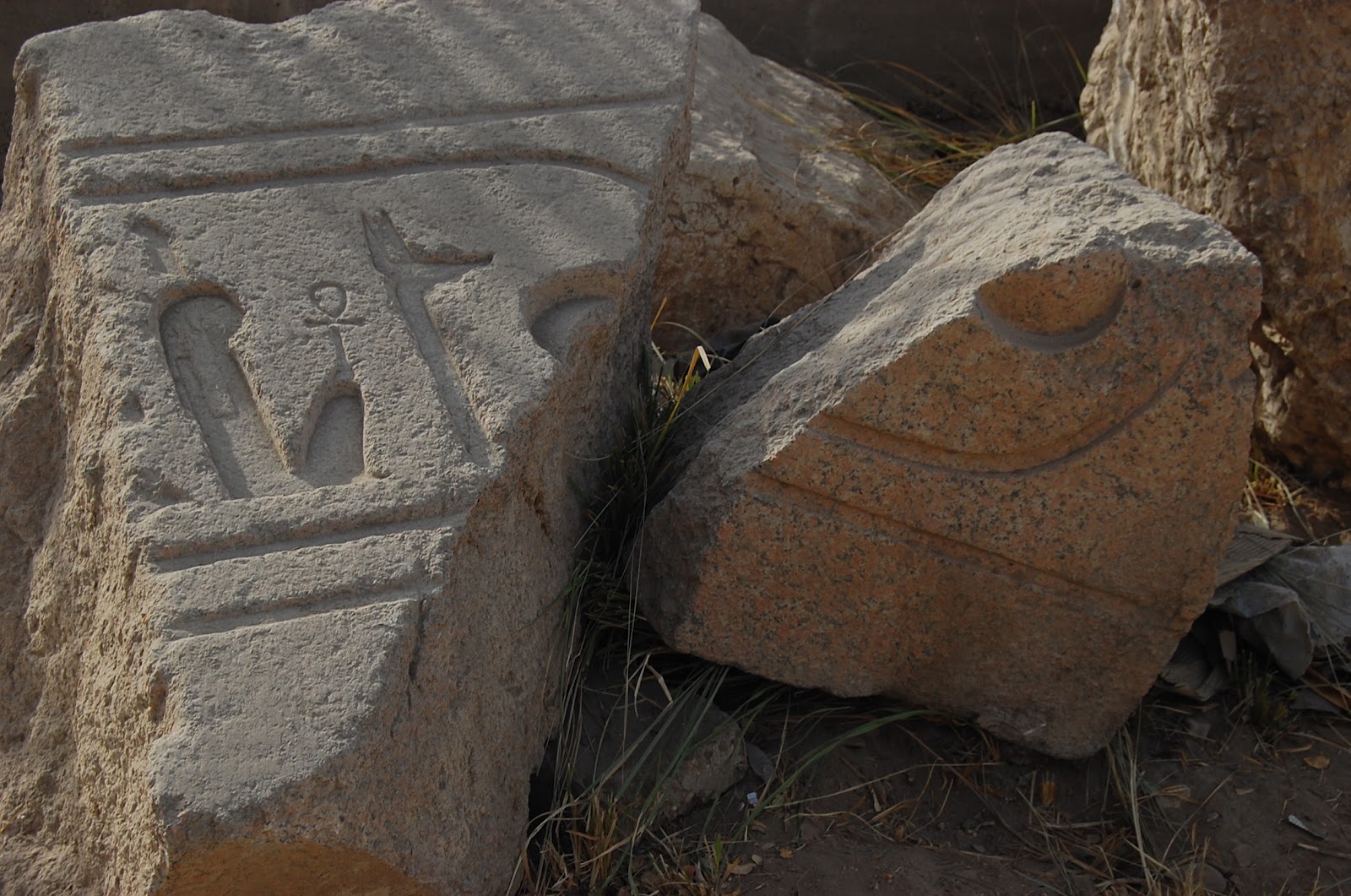 |
| Broken heiroglyics from a fallen civilization |
Sunday, September 25, 2011
How Much is it Worth to You?
I recently spent a little over a week in Morocco, a country that I have wanted to visit since I was about ten. It was pretty much everything I had hoped for and anticipated, and of course a whole lot more, as one is never completely prepared for travel. We arrived in Marrakech midafternoon, and it was not nearly as hot as I had anticipated, only about 32 degrees celcius if that. Luckily the air was dry and our Riad was lovely. We had a memorable and refreshing first cup of scaldingly hot mint tea (which became an addiction), nibbled on almond cookies, and waited for the rest of our party to arrive from another part of the country. Once the whole gang was assembled and we were properly refreshed, we headed out to the infamous Marrakech Night Market held nightly in the Djemma El Fna, as it has for hundreds of years. It is one of the only world hertage sites to be purely an activity instead of a building. Nightly performances from storytellers, gypsies, roving henna artists, and monkey wranglers. It can be pretty overwhelming, especially for the stray American unaccustomed to barganing and defending your choices in dining and shopping. The food stalls are full of people with menus proclaiming to give you a life changing experience; when we finally just picked one there was applause for the salesman who finally got our group of five to take a seat.

Morocco felt like a very personal country, where everyone wants to hear your story, and if you by something all the better, but they at least want to talk with you. They really see the human as an individual of worth instead of just another customer - which is not necessarily what you would expect entering in to a bargaining culture. The offer of a cup of tea is not a scam to get you to buy more. They have been operating in the arena of cross cultural communication for centuries, and its high time we in the west trust a little in the decency of human beings. Everywhere we went shopkeepers proudly discussed the great things Morocco has to offer, lamenting the lack of tourism and the brain drain they have for the upper crust of educated society. You get the sense that this is a country of people with lots to offer but still trying to find ways to market it to an arab afraid western world. So in the end, how much is that rug, or platter, or scarf really worth? Worth the hassel of bargaining to get a fair price, knowing that your piece is very likely the only one exactly like it, or worth the convience of not bargaining to get a mass produced clone? How much is the livelihood of a master artesan worth? Or the continuation of centuries of tradition?

Marrakech Night Market
The rule of life here is bargaining. Nothing has a fixed price - it is all what it is worth to you the buyer. The seller will of course begin with some outrageous fee, expecting you to at the least halve the offer if not more, assuming that their take will be somewhere around 60% of the original asking price. Many a salesman will of course try to get as much for their wares as they can, but that is no different that fixed price places in the states who mark up their wares for a larger profit. At one point in the trip the shop keeper kept lower the price for me as I kept trying to leave the store, mainly because I didn't have any bills small enough to bargain with. I never want to bargain hard for something cheap, then hand over large bills expecting change. It just makes it all feel so trivial, especially when you factor in the exchange rate. (The dirham was 1/8 the worth of the US dollar at the time we were there.) You can find real deals everywhere, but you can also see the human touch in everything. There is hand painting, carving, weaving, guilding, on everything. From stair risers to ceiling beams, there is nothing mass produced. Even the daily orange juice is fresh squeezed. We saw no McDonalds or Starbucks; the most commercialized products we saw were bottled water and yoghurt. Everything changed when we got back into Europe. It was sad to leave a place that puts such a high value on craftsmen and individual attention to detail instead of cheaply made, mass produced generic wares. Morocco felt like a very personal country, where everyone wants to hear your story, and if you by something all the better, but they at least want to talk with you. They really see the human as an individual of worth instead of just another customer - which is not necessarily what you would expect entering in to a bargaining culture. The offer of a cup of tea is not a scam to get you to buy more. They have been operating in the arena of cross cultural communication for centuries, and its high time we in the west trust a little in the decency of human beings. Everywhere we went shopkeepers proudly discussed the great things Morocco has to offer, lamenting the lack of tourism and the brain drain they have for the upper crust of educated society. You get the sense that this is a country of people with lots to offer but still trying to find ways to market it to an arab afraid western world. So in the end, how much is that rug, or platter, or scarf really worth? Worth the hassel of bargaining to get a fair price, knowing that your piece is very likely the only one exactly like it, or worth the convience of not bargaining to get a mass produced clone? How much is the livelihood of a master artesan worth? Or the continuation of centuries of tradition?
Sunday, September 4, 2011
Into the Great Unknown, Again
Tomorrow morning we leave for a month - well, 24 days, but whose really counting - in Europe and North Africa. Travel is definately a bug that I caught young, and its something that I can't quite explain how. We never went anywhere far flung on family vacations, usually because we couldn't afford it either financially or time wise. I was always the kid reading the folk tales from far off places instead of contemporary childrens fiction, which in the '90s was dominated by Goosbumps and Sweet Valley High. Since my first trip abroad in 1998, this will be my seventh international flight to three new countries. Once I get back from a trip, the wanderlust is sated for maybe a month, and then I'll be already idly planning the next trip. It has become a matter of pride in a way, being able to refute others misinformed comments about the world at large and point out where their own cultural biases lay. Anything from belief in elves in Iceland (you can't prove that they don't exist!) to Ethiopian Orthodox fasting, which for the devout totals 250 days a year, the world is full of diverse practices and beliefs, and it would be beneficial for us to be exposed to these different ways of seeing. It encourages you to reevaluate all that you deems as natural and inalienable and see just how much we take for granted.
There are many great and inspiring quotes on the web about travel, but one that seems to speak to me is by the English writer Gilbert Chesterton: "The whole object of travel is not to set foot on foreign land; it is at last to set foot on one's own country as a foreign land." How true it is that something a simple as a free potable drinking fountain can be overlooked on your way out of the country and rejoiced over on your way back in. To see the land you live in a little differently, not as an outsider persay but to see how the rest of the world sees you. It seems like as one from the United States we always expect the worst from the rest of the world, and are fittingly not surprised when a dictator comes to power or an internal sect of people are oppressed. The rest of the world, on the other hand, expects the best from the US and are disappointed when we fail to meet the high expectations, such as the debacle that is Iraq post-Hussein, or Guantanemo - the infamous black stain on our human rights record.
We were in Egypt in February 2009, just after the inaguration of Barack Obama. Everywhere we went people would ask us questions about politics trying to get a feel for how our new president was viewed in country, as they clearly had disdane for the previous one. They would ask questions about Sen. McCain, and would tell us how happy they were that Obama won the election and that Americans had come to visit and that not all muslims are terrorists. They had this sense of renewed hope in the United States, like we had been knocked down in their esteem and had now been catapulted back into the stratosphere. When we asked questions back about how they felt about their president, Hosni Mubarak, they had an enigmatical answer - he doesn't make war and we like that. If the best you can say about your leader is that he doesn't provoke the neighboring countries, there are clearly some other issues afoot.
This impending trip promises a whole new lot of surprises and memorable experiences. I, for one, hope to see goats in trees, and drink copious amount of mint tea. I'm tempted to go to a hammam, but so far no takers in the group and I don't want to go alone. We've been planning this trip for almost nine months, so keeping my expectations at bay has been tricky. Nothing is worse that spending all that time and money to be thoroughly disappointed due to your own overshot expectations. That's how Venice was for me the first time. On the second go around, because my experience had sunk it so low, I had a wonderful time. So we'll see. Let the latest journey begin!
 |
| Gilbert Chesterton |
We were in Egypt in February 2009, just after the inaguration of Barack Obama. Everywhere we went people would ask us questions about politics trying to get a feel for how our new president was viewed in country, as they clearly had disdane for the previous one. They would ask questions about Sen. McCain, and would tell us how happy they were that Obama won the election and that Americans had come to visit and that not all muslims are terrorists. They had this sense of renewed hope in the United States, like we had been knocked down in their esteem and had now been catapulted back into the stratosphere. When we asked questions back about how they felt about their president, Hosni Mubarak, they had an enigmatical answer - he doesn't make war and we like that. If the best you can say about your leader is that he doesn't provoke the neighboring countries, there are clearly some other issues afoot.
This impending trip promises a whole new lot of surprises and memorable experiences. I, for one, hope to see goats in trees, and drink copious amount of mint tea. I'm tempted to go to a hammam, but so far no takers in the group and I don't want to go alone. We've been planning this trip for almost nine months, so keeping my expectations at bay has been tricky. Nothing is worse that spending all that time and money to be thoroughly disappointed due to your own overshot expectations. That's how Venice was for me the first time. On the second go around, because my experience had sunk it so low, I had a wonderful time. So we'll see. Let the latest journey begin!
Subscribe to:
Posts (Atom)